Venous and Arterial Ulcer Treatment in Orange County, Los Angeles & Riverside County
Circulation-related ulcers develop when poor blood flow prevents the skin from healing properly. These wounds are often chronic, slow-healing, and prone to infection if not treated by a wound care specialist.
DermLounge provides advanced care for circulation-related ulcers, including venous and arterial ulcers. Our team delivers consistent, evidence-based treatment through in-clinic visits and mobile bedside care to support healing, reduce complications, and prevent hospitalizations.
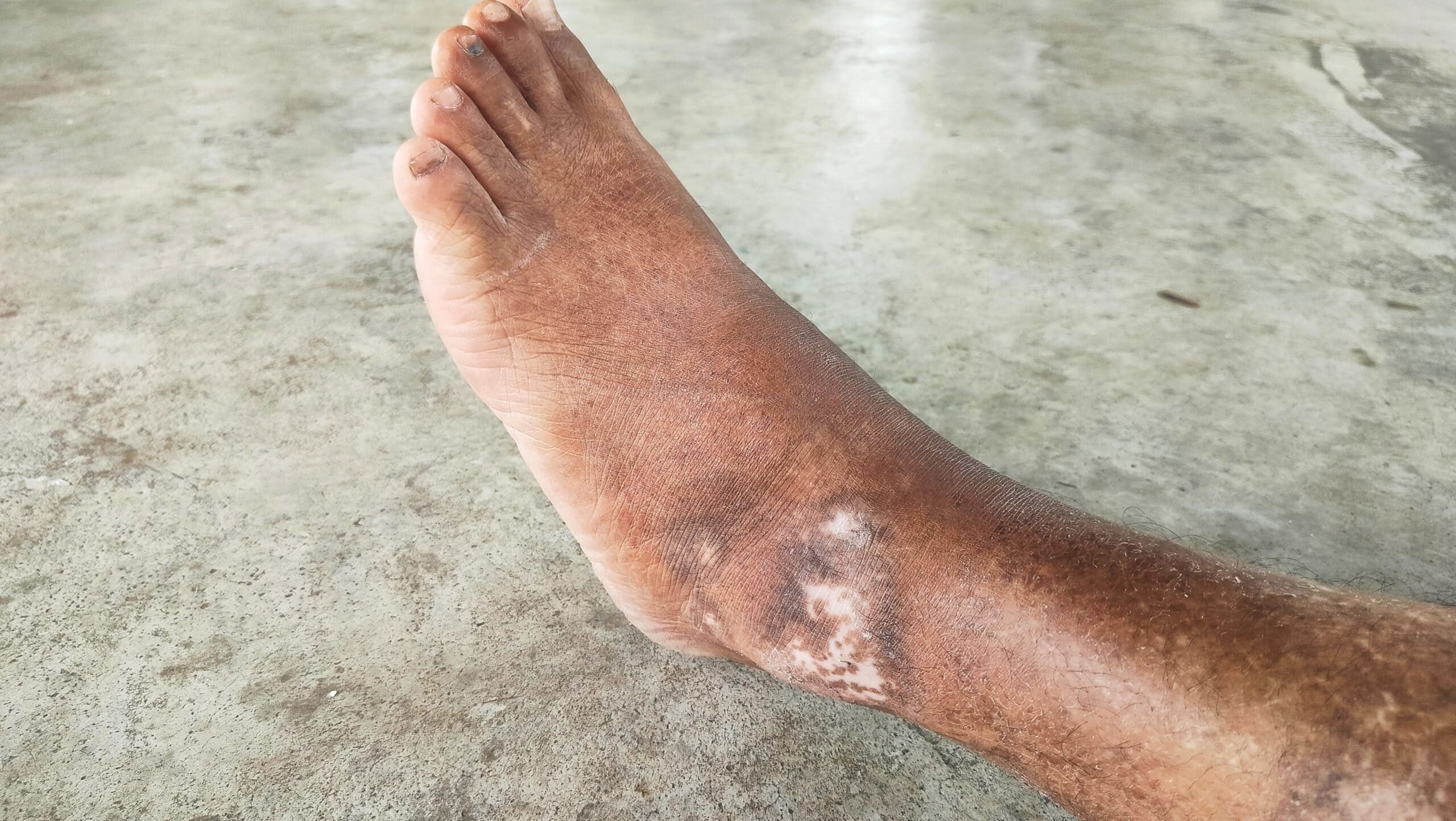
What Are Circulation-Related Ulcers?
Circulation-related ulcers occur when damaged or narrowed blood vessels restrict blood flow to the skin. Without adequate circulation, wounds struggle to heal and can worsen over time.
These ulcers most commonly affect the lower legs, ankles, feet, and toes and often require ongoing, specialized wound care.
Venous Ulcers (Venous Stasis Ulcers)
Venous ulcers develop when veins in the legs do not effectively return blood to the heart, leading to fluid buildup, swelling, and skin breakdown. They are most often found around the ankles or lower legs.
Common signs of venous ulcers include leg swelling, skin discoloration, itching, heaviness, and open wounds that heal slowly or reopen.
DermLounge treats venous ulcers with a focus on wound closure and long-term prevention.
Arterial Ulcers
Arterial ulcers occur when narrowed or blocked arteries limit blood flow to the skin and tissue. These wounds are often painful and typically appear on the feet, toes, or pressure points of the lower extremities.
Arterial ulcers may appear small but can progress quickly without proper care. Early evaluation is essential to prevent infection and tissue damage.
How DermLounge Treats Circulation-Related Ulcers
Our treatment approach is designed to improve healing outcomes while minimizing complications. Care may include:
- Bedside wound debridement to remove non-viable tissue
- Advanced wound dressings tailored to circulation-related wounds
- Frequent wound assessment and measurement
- Coordination with referring providers and caregivers
- Advanced skin grafting for eligible non-healing ulcers
- Patient education to support circulation and wound prevention
Patients are typically seen one to two times per week to ensure consistent progress.
When to Seek Wound Care for a Circulation-Related Ulcer
You should seek specialized wound care if a leg or foot wound:
- Has not healed within two to four weeks
- Is painful, worsening, or showing signs of infection
- Is associated with swelling, skin discoloration, or poor circulation
- Reopens after appearing to heal
Early intervention improves healing outcomes and reduces the risk of serious complications.
Insurance and Coverage
Circulation-related ulcer care is fully covered by Medicare and Medi-Cal for qualifying patients. There is no out-of-pocket cost for eligible individuals. Coverage eligibility is confirmed during the referral and intake process.
Areas We Serve
We provide venous and arterial ulcer care throughout Orange County, Los Angeles County, and Riverside County. Services include in-clinic treatment and mobile wound care across the region.